
M.T. Vasudevan Nair Controversy: Triggering Conflict Over Prameela Nair's Life Story
BY FASLA FADHI
05 February, 2026
What if someone tells you that your adored writer is a misogynistic womaniser, obliterator or criminal? Would you still love them the way you loved their art? Would you still enjoy their works in the same way?
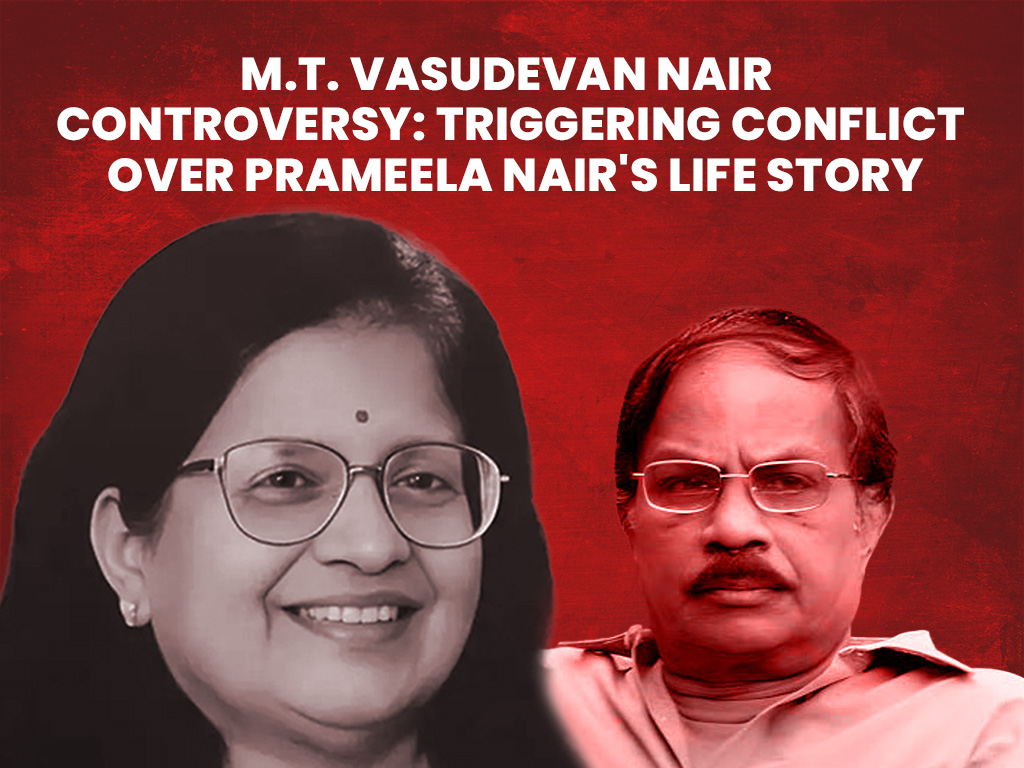
Recently, a controversy has erupted over the personal life of legendary Malayalam writer M.T. Vasudevan Nair. The newly released book eMpTy sPaCe – Bashpeekruthayude Aaram Viral, co-authored by screenwriter and founder-member of WCC Deedi Damodaran and activist, blogger and writer Echmukutty, has stirred the discussion on M.T. and his first wife, Prameela Nair.
An English professor and writer, Prameela Nair played a crucial role in the early stages of M.T.’s writing career. By translating his works, she helped in gaining global recognition for them. Her short story “Kaalam” was published in Anweshana Vaarika in 1967. However, their separation caused her to be banished from the literary world. One of her works, named Nashtabodhangal, got released, but only a few know about it.
eMpTy sPaCe, published by Book Worm, narrates the life of Prameela Nair, whose existence has been forgotten by the literary world following the increasing prominence of M.T. This marriage has completely eclipsed her career and personal life.
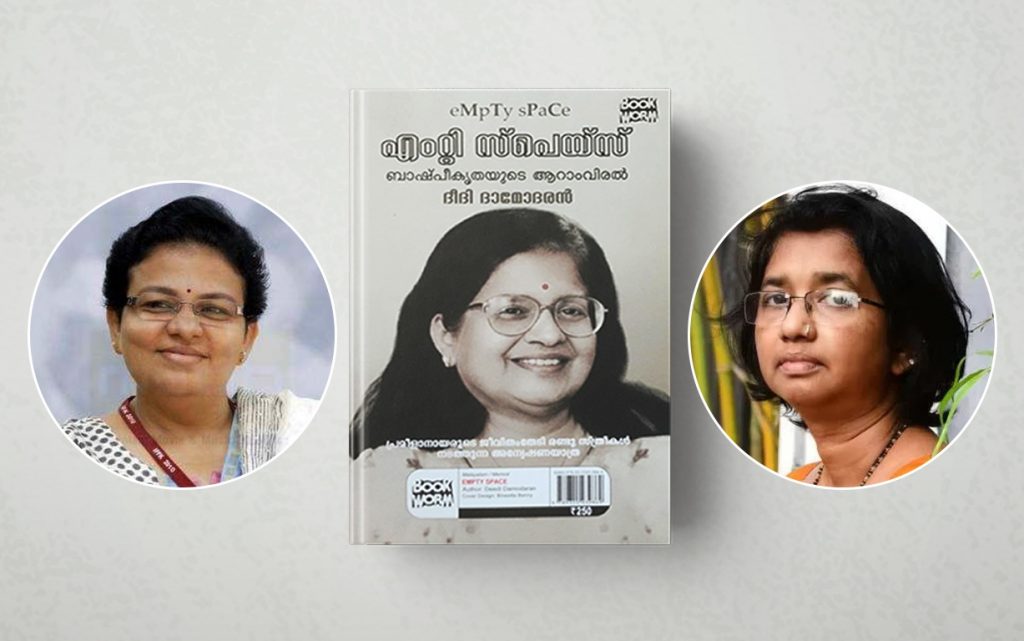
Deedi Damodaran (L), Echumukutty (R)
Regarding this book, M.T.’s daughters, Aswathy and Sitara, jointly posted a Facebook post demanding it be withdrawn, implying that both authors are trying to tarnish their father’s image with blatant untruths, causing them deep distress. They asserted that the authors had penned this work without their permission, seeking fame and financial gain through unfounded rumours.
In response to this criticism, Deedi Damodaran made it clear that it’s entirely her feministic observation toward a deceased writer who got cast out by the literature world, and it has nothing to do with her being someone’s wife. She argues that the public has erased the translator and writer Prameela Nair from memory, treating her as if she never existed. The book relies on published documents, not unverified facts; she welcomes clarification on any speculative content.
Similarly, Echmukutty held that her version in the book is wholly her memory of Prameela Nair and the resemblance she felt with her life. The undeniable fact is that the patriarchal system purposefully shunned this woman and her contributions, viewing her continued presence as a hindrance to the male writer’s legacy.
Even though there is an ethical concern raised about the book as a posthumous writing, it doesn’t undermine the arguments’ depth. This instance is not an isolated case or exception. Many iconic legends have faced allegations regarding sexual assault cases and caught up in controversies involving crimes. These incidents demonstrate that their artistic excellence does not shield them from the challenges of their problematic lives. Touching upon gender politics, it needs to be understood that a worthy work doesn’t whitewash the wrongdoings of an author. Being a celebrated writer does not exempt a person from facing their wrongdoings or answering questions from society. The bitter truths will eventually surface, necessitating accountability and the reasonable minds will call out the nakedness of the once-revered artist idol.